Wondering how factories can cut emissions without stopping production? The main industrial decarbonization strategies are electrification, efficiency, carbon capture, green fuels and recycling.
This guide sits within the wider topic of sustainable manufacturing, which looks at how factories can shrink their footprint.
| Item | Value |
|---|---|
| Industry’s share of direct global energy system emissions (2022) | About a quarter |
| Required fall in industrial emissions by 2030, versus 2019 | 43% |
| Share of industrial energy use from direct fuel combustion | 73% |
| Average lifespan of an industrial facility | Roughly 20 years |
| Cement’s share of global greenhouse gas emissions | 8-9% |
| Carbon capture projects in development worldwide | Over 700 |
These figures come from a February 2025 overview by CAS Insights. Figures like these can change, so check the source before you rely on them.
Why does industrial decarbonization matter now?
According to the CAS overview, the industrial sector accounted for a quarter of direct global energy system emissions in 2022. It also cites the International Energy Agency’s estimate that industrial emissions must decrease by 43% by 2030, compared with 2019, to stay on track for net zero by 2050.
Timing matters because industrial facilities last roughly 20 years on average. As the same overview puts it, plants installed from 2030 onward will need to be non-emitting from day one.
The climate backdrop adds pressure. Under the Paris agreement, countries agreed to limit the long-term average temperature increase to 1.5 °C above the pre-industrial (1850-1900) average. The overview notes that the world surpassed 1.5 °C for the first time in 2024.
The heaviest emitters: cement, steel and chemicals
Three industries dominate global industrial emissions, according to the CAS overview. Their shares of emissions are:
- Cement: 8-9% of global greenhouse gas emissions.
- Steel and iron: roughly 7%.
- Chemicals and plastics: around 5%, representing 18% of industrial CO2.
These sectors are hard to clean up because their processes use extreme heat generated by fossil fuels. The overview says replacing those fossil-fuel-based processes has largely been technologically and economically infeasible.
Each industry needs its own mix of solutions. Examples named in the overview are hydrogen direct reduction in steel, electric crackers in petrochemicals, and lower-clinker formulations in cement.
The five main routes to lower industrial emissions
The CAS overview describes five pathways as the core toolkit. Each one is covered below.
Electrification with renewable power
Direct fuel combustion is responsible for 73% of global industrial energy usage, while only 27% comes from electricity, per the overview. That leaves ample room to electrify more processes. The catch is that the electricity must come from renewable sources such as wind and solar.
Energy efficiency
Industrial efficiency work mostly focuses on buying more efficient equipment. The overview says designing integrated systems around efficiency could yield up to 90% energy savings. Steam systems and heat recovery are major considerations, because they account for extensive industrial energy use.
Carbon capture and storage
Where fossil fuels are the only viable option, industries can use carbon capture and storage (CCS). Captured CO2 is liquified and geologically sequestered deep underground, and in some cases it can serve as a chemical feedstock.
The overview reports over 700 CCS projects in various stages of development. It predicts a global capture rate of 2-12 GtCO2 per year, mostly from industry, and says the strategy still needs to be accelerated and scaled up.
Green fuels
Hydrogen releases no emissions when burned, but making it sustainably is the challenge. As of the CAS February 2025 overview, most hydrogen is produced by methane steam reforming, which is emissions-intensive. Industries can add CCS to that process or pursue green hydrogen, made by using renewable electricity to split water into oxygen and hydrogen.
Biofuels are the other option. The overview lists uses such as aviation fuel and feedstock for various chemicals.
Recycling metals and plastics
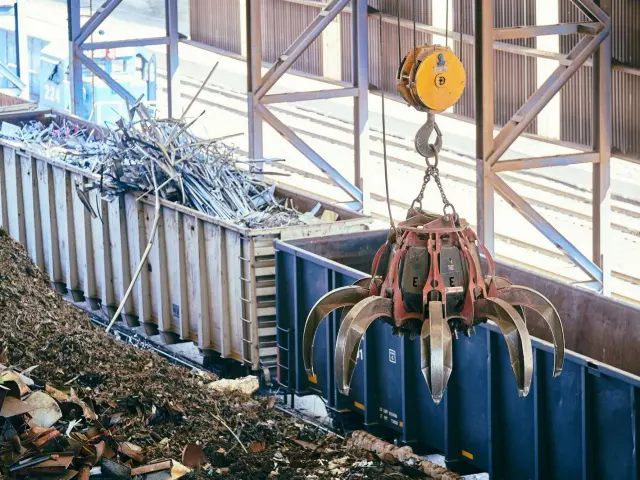
Expanded recycling of metals and plastics reduces demand for raw materials, and with it the energy needed to produce them. How recycling fits into wider material loops is explored in the guide to circular economy in manufacturing.
Choosing the right mix
No single route works everywhere. A steelmaker, a cement plant and a petrochemical complex face different heat needs and feedstocks, so each ends up combining several routes. The overview also shows how the routes can reinforce one another: oxygen-enriched air in combustion gives higher CO2 concentrations in exhaust gases, which makes capture easier.
To compare routes fairly, it helps to count emissions across a product’s whole chain, a method set out in life cycle assessment explained. That check can show whether a fix in one plant simply moves emissions elsewhere.
Barriers that slow progress
Research is moving faster than deployment. The CAS analysis found a sharp uptick in decarbonization publications since 2019, yet it says commercial deployment is lagging research, though momentum is clearly building.
Specific hurdles named in the overview include:
- High-temperature processes that fossil fuels deliver easily and cheaply.
- Hydrogen that is hard to produce sustainably at scale.
- CCS that must be accelerated and scaled up to meet net zero goals.
Frequently asked questions
What are the main industrial decarbonization strategies?
Show answer
The CAS overview names five: electrification using renewable power, integrated energy efficiency, carbon capture and storage, green fuels such as hydrogen and biofuels, and expanded recycling of metals and plastics.
Which industries emit the most?
Show answer
Cement leads at 8-9% of global greenhouse gas emissions, followed by steel and iron at roughly 7% and chemicals and plastics at around 5%, per the CAS overview.
Why is cement so hard to decarbonize?
Show answer
Cement production needs very high temperatures, which fossil fuels deliver easily and cheaply. Where they are the only viable option, CCS is one answer, and lower-clinker formulations are another.
How fast must industrial emissions fall?
Show answer
The International Energy Agency estimate cited by CAS in February 2025 is a 43% fall by 2030 compared with 2019, with declines continuing afterward.