Trying to make sense of the green chemistry principles? You can treat them as twelve design rules that cut hazards and waste at the source instead of cleaning up afterwards.
This explainer sits within the wider topic of sustainable manufacturing, where the design of chemical processes is one important piece.
| Item | Value |
|---|---|
| Number of principles | 12 principles (twelve) |
| Year the principles were formulated by Anastas and Warner | 1998 |
| US Pollution Prevention Act enacted | 1990 |
| EPA and NSF Green Chemistry Program initiated | 1991 |
| US Presidential Green Chemistry Challenge Award founded | 1996 |
These figures come from Yale’s Center for Green Chemistry & Green Engineering and a Penn State course page. Pages get updated and wording can change, so check the source before you rely on them.
What green chemistry actually means
Yale’s centre defines green chemistry as the design of chemical products and processes that reduce or eliminate the use and generation of hazardous substances. The key word is design: the aim is to avoid the problem at the drawing board, not to manage it later.
Penn State’s course material describes the same idea as efficiently using renewable raw materials, eliminating waste and avoiding toxic and hazardous reagents and solvents. Together, the twelve principles work as a shared vocabulary for that goal.
The twelve principles in plain language
The list below follows the wording published by Yale and Penn State, both of which credit Paul Anastas and John Warner’s 1998 book Green Chemistry: Theory and Practice. The principles are grouped here by theme so they are easier to remember.
Cut waste and use materials well
- Prevention: it is better to prevent waste than to treat or clean it up after it has been created.
- Atom economy: design synthetic methods so that as much as possible of every material used ends up in the final product.
- Reduce derivatives: avoid unnecessary extra steps such as blocking groups or protection and deprotection, because they need additional reagents and can generate waste.
- Catalysis: catalytic reagents, as selective as possible, are superior to stoichiometric reagents.
Choose safer chemicals and solvents
- Less hazardous chemical syntheses: where practicable, use and generate substances with little or no toxicity to people and the environment.
- Designing safer chemicals: a product should do its job while minimizing its toxicity.
- Safer solvents and auxiliaries: make solvents and separation agents unnecessary where possible, and harmless when they are used.
Save energy and rethink raw materials
- Design for energy efficiency: energy needs have environmental and economic costs and should be minimized. If possible, run reactions at ambient temperature and pressure.
- Use of renewable feedstocks: a raw material should be renewable rather than depleting whenever that is technically and economically practicable.
Plan for the end of life, monitoring and safety
- Design for degradation: products should break down into innocuous substances at the end of their function and not persist in the environment.
- Real-time analysis for pollution prevention: develop methods that monitor and control a process while it runs, before hazardous substances form.
- Inherently safer chemistry for accident prevention: choose substances, and the form they take, to minimize the chance of releases, explosions and fires.
Where the principles came from
According to Penn State’s course page, the development of the principles was closely tied to the Pollution Prevention Act, enacted in the USA in 1990. That law shifted policy away from end-of-pipe clean-up and towards waste minimization and removing pollutants at the point of origin.
The same page says the Environmental Protection Agency and the National Science Foundation initiated a Green Chemistry Program in 1991. The US Presidential Green Chemistry Challenge Award followed in 1996, and similar initiatives appeared in the UK and some other countries.
Penn State calls this approach pollution prevention, also known as source reduction, and describes it as the first-choice measure for reducing risk to human health and the environment.
Hazard versus risk: why design beats containment
Penn State’s lesson defines risk formally as a function of hazard and exposure. Traditional practice lowers risk by limiting exposure, for example with tanks, monitoring and trained staff.
Green chemistry instead aims to remove the hazard itself. If the hazard is gone, no unexpected increase in exposure downstream can raise the risk.
The course illustrates this with a fire at the Warsaw Chemical Co. plant in Indiana, which makes car washing products. The fire caused several explosions, and tanks holding mostly methanol ruptured, forcing the hazard out of containment. The lesson’s point is that every response, such as evacuation and clean-up, limited exposure, whereas the green chemistry approach asks whether the methanol is needed at all.
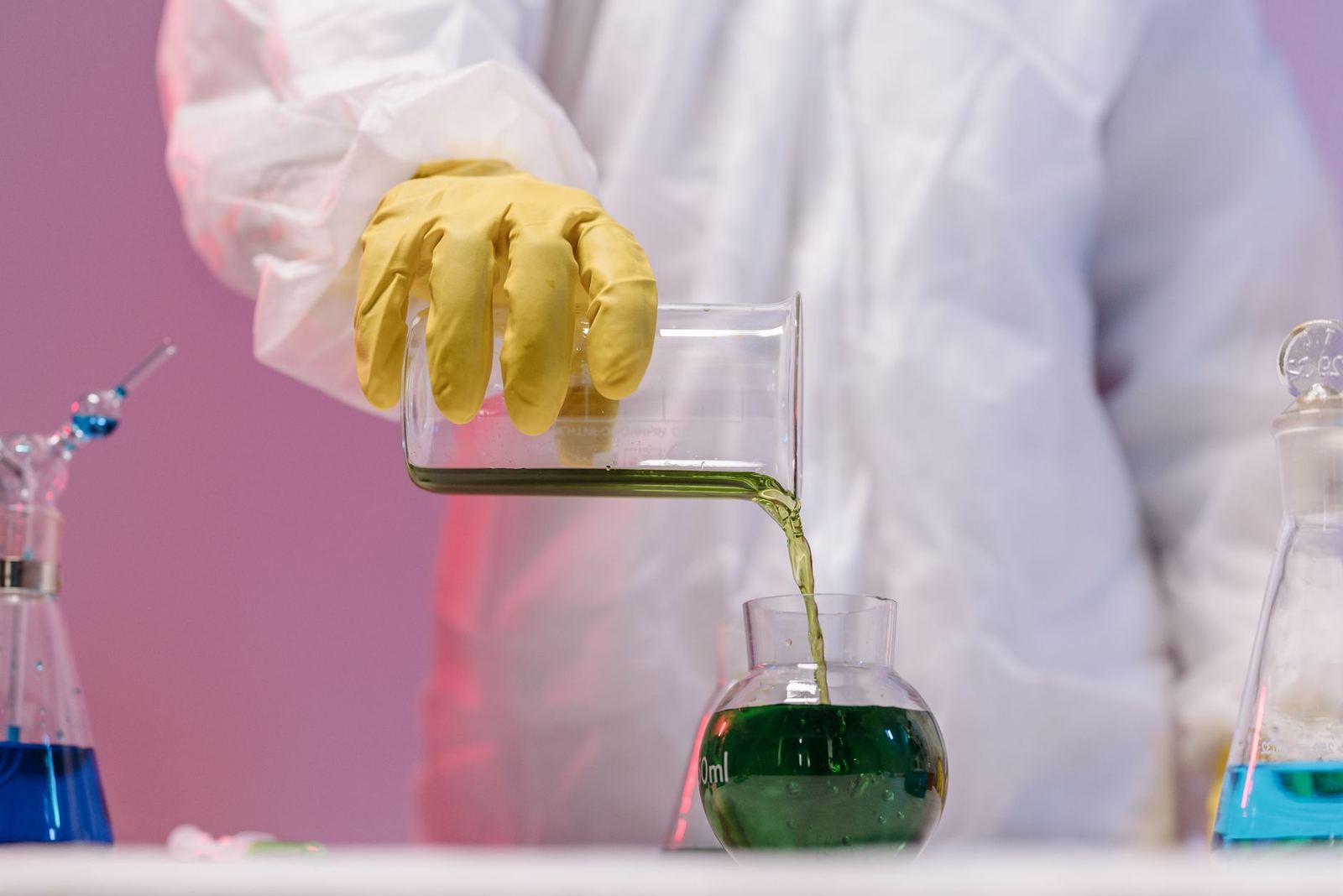
The same lesson is candid about the trade-off: replacing a hazardous material takes expertise and investment, and a company still wants to stay competitive and profitable.
How to use the principles as a checklist
Penn State notes that chemists are guided to use the twelve principles as a checklist when evaluating a specific process or technology at the stage of design and scale-up. You can borrow that habit even if you are not a chemist.
- Ask what waste a process creates and whether it could be prevented instead.
- Check whether each solvent, reagent and extra step is really needed.
- Look at the energy the process demands and whether its raw materials are renewable.
- Ask what happens to the product at the end of its life.
- Consider how accidents such as releases, explosions or fires could be designed out.
The principles judge a process by its design, so a wider method such as life cycle assessment explained is a natural companion for looking at a whole product. If renewable feedstocks interest you, bio-based packaging materials are one place where that principle comes up.
Frequently asked questions
What are the twelve principles of green chemistry?
Show answer
They are prevention, atom economy, less hazardous chemical syntheses, designing safer chemicals, safer solvents and auxiliaries, design for energy efficiency, use of renewable feedstocks, reducing derivatives, catalysis, design for degradation, real-time analysis for pollution prevention, and inherently safer chemistry for accident prevention.
Who formulated the principles?
Show answer
Yale and Penn State both credit Paul Anastas and John Warner, in their 1998 book Green Chemistry: Theory and Practice.
What is the difference between hazard and risk?
Show answer
Hazard and exposure are the two ingredients of risk. Containment only limits exposure and, per the same course, may be less useful the farther a hazard travels from its source, so green chemistry tries to remove the hazard in the first place.
Does green chemistry mean avoiding all chemicals?
Show answer
No. Yale’s definition is about designing products and processes that reduce or eliminate hazardous substances. Many of the principles use qualifiers such as “wherever practicable”, which acknowledges technical and economic limits.