If you want to understand the common agricultural policy bioeconomy link, start with this: CAP payments are tied to environmental rules, so they shape how farmland and forests are managed. The key figures are below.
This guide sits inside our wider look at the european bioeconomy strategy, which sets the bigger frame for the policy covered here.
| Item | Value |
|---|---|
| CAP 2023-27 entry into force | 1 January 2023 |
| Share of direct payments budget for eco-schemes | At least 25% |
| Share of rural development funds for climate, biodiversity, environment and animal welfare | At least 35% |
| Share of CAP budget that has to be climate-relevant | 40% |
| Arable land per farm for biodiversity and non-productive elements | At least 3% (7% with eco-scheme support) |
| EU funds for agricultural subsidies in Germany | Approx. 6.2 billion euros per year, 2023 to 2027 |
These figures come from the European Commission’s CAP and environment page and the German federal agriculture ministry. They can change, so check the sources before you rely on them.
How the CAP is built
The CAP has three environmental goals: tackling climate change, protecting natural resources and enhancing biodiversity, according to the European Commission. It pursues them through support for organic farming and for responsible management of inputs such as pesticides and fertilisers.
Money flows through two pillars. Germany’s ministry describes the first as mainly direct payments granted per hectare of farmland, and the second as funding programmes for sustainable, environmentally sound farming and rural development, as set out on the BMEL page.
The Commission names three environmental building blocks:
- Conditionality links direct payments to EU rules on the environment and on human, plant and animal health.
- Eco-schemes support farmers who adopt or maintain practices that serve EU environment and climate goals.
- Rural development interventions back agri-environment-climate commitments, sustainable forest management, investments, cooperation and knowledge transfer.
The current period, the CAP 2023-27, entered into force on 1 January 2023, according to the Commission’s page on the CAP and the environment.
Where does the CAP meet the bioeconomy?
A bioeconomy runs on biological resources, and in Europe much of that resource base is land. Almost half of the EU’s surface is farmland, says the Commission’s eco-schemes page (Romanian-language version).
The Commission pages used for this guide do not describe a bioeconomy-specific CAP instrument. The link is indirect: the CAP sets the rules on soil, water, biodiversity and forests that shape how sustainably farm and forest biomass is produced.
The Commission says the CAP 2023-27 supports agriculture in making a much stronger contribution to the goals of the European Green Deal, as described on its environment page. That is the same thread that runs through our piece on the EU green deal and bioeconomy.
Eco-schemes: paying for public goods
Eco-schemes are one of the new elements of the CAP 2023-2027, and they reward farmers for conserving natural resources and delivering public goods, per the Commission’s eco-schemes page. At least 25% of the direct payments budget goes to them.
The same page says eco-schemes can support practices such as:
- organic farming
- agroecological practices
- precision farming
- agroforestry
- carbon farming
- higher animal welfare
Eco-schemes are mandatory for EU countries but voluntary for farmers. The practices they pay for should go beyond what conditionality already requires.
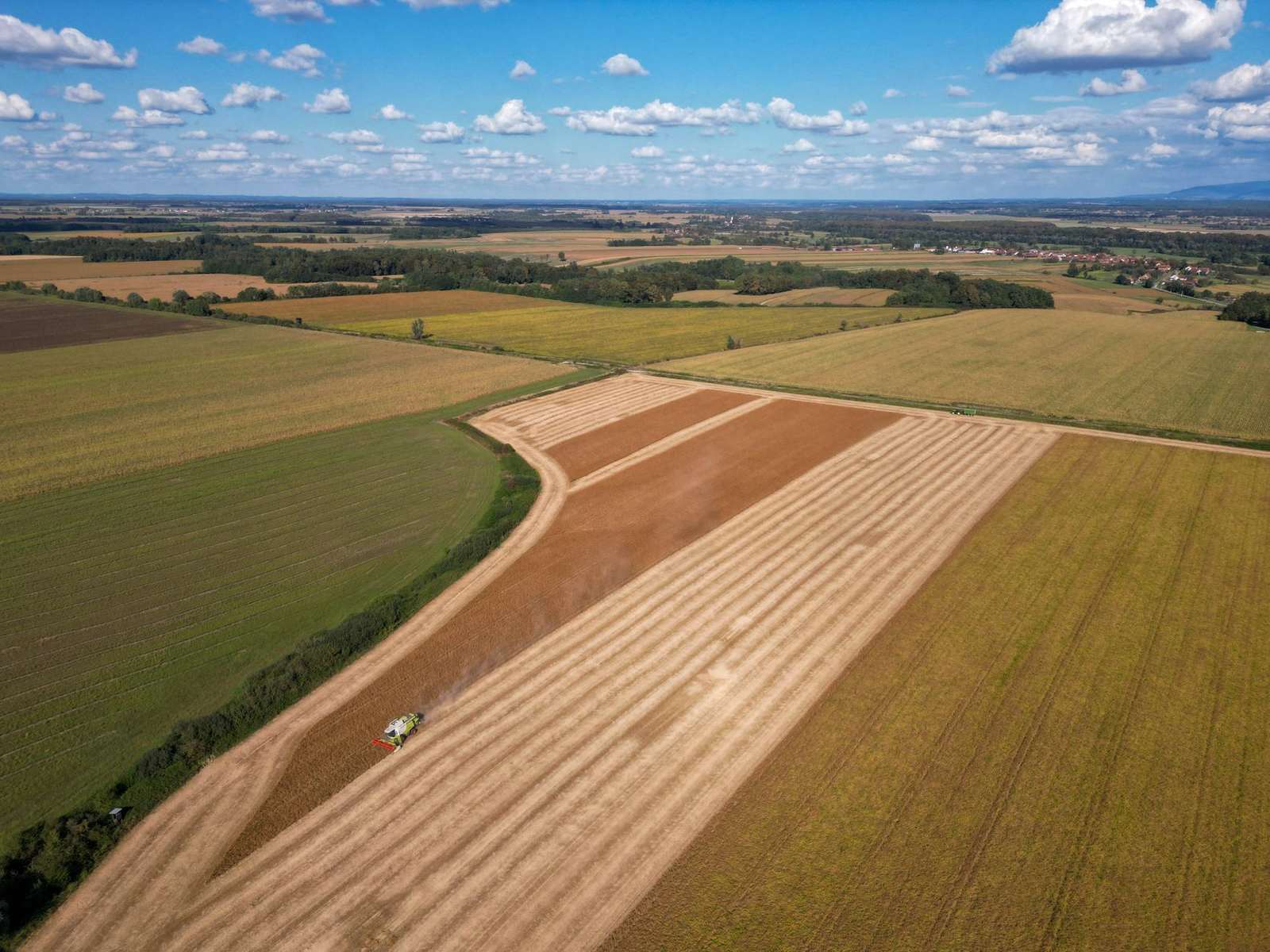
There is some flexibility on the money. During a two-year learning period covering 2023 and 2024, a country may spend less than 25% if farmer uptake is lower than planned, as long as most of the shortfall is made up by the end of 2027.
Climate, soil, water and forests
For climate, the Commission estimates that €104bn, or 25% of CAP funding in the 2014-20 period, went to climate-relevant actions. It adds that agricultural greenhouse gas emissions declined by 28.9% between 1990 and 2021 without reducing production levels, in its CAP and environment overview.
On natural resources, the same overview lists several rules and incentives:
- buffer strips along watercourses to protect water quantity and quality
- mandatory standards for minimum soil cover
- encouragement to cut ammonia emissions
- support for the protection, restoration and sustainable management of forests
The CAP 2023-27 also sets minimum budget shares:
- at least 25% of direct payments for eco-schemes
- at least 35% of rural development funds for climate, biodiversity, environment and animal welfare
- at least 15% of operational programme spending in the fruit and vegetables sector for the environment
- 40% of the CAP budget to be climate-relevant, supporting a 10% biodiversity commitment for the EU budget
For the energy side of biomass, the Commission pages used here say nothing about biofuels or energy crops. Our explainer on renewable energy directive biofuels is the better starting point for that.
Germany as a worked example
Germany’s ministry says approx. 6.2 billion euros of EU funds are available each year for agricultural subsidies from 2023 to 2027. Its CAP strategic plan covers approx. 30 billion euros over that period, according to the BMEL page.
The ministry says the plan touches roughly 40 million people living in rural areas, and that 300,000 applicants are eligible in the agricultural sector alone.
Germany offers seven eco-schemes. They include setting aside additional arable land and extensifying permanent grassland for biodiversity, and the ministry says new options such as managing agroforestry systems can also be funded.
What can change in the common agricultural policy
CAP rules are not frozen. As of the Commission’s press release of 13 February 2024, it had formally adopted a regulation giving European farmers a partial exemption from the conditionality rule on fallow land, as listed on the eco-schemes page.
Each EU country must show a higher ambition on environment and climate action than in the previous programming period, and must update its plan when climate and environmental legislation is modified, says the Commission’s environment page. Because plans change with the law, check the Commission’s agriculture site for updates before you rely on any figure here.
Frequently asked questions
What are the CAP’s environmental goals?
Show answer
The Commission lists three: tackling climate change, protecting natural resources and enhancing biodiversity. It says the CAP works toward them through measures such as support for organic farming and responsible use of pesticides and fertilisers.
Are eco-schemes compulsory for farmers?
Show answer
No. The Commission says they are mandatory for EU countries but voluntary for farmers, so a farmer chooses whether to take part.
How much of the CAP budget has to be climate-relevant?
Show answer
For the CAP 2023-27, the Commission says 40% of the CAP budget has to be climate-relevant. That supports the EU’s commitment to dedicate 10% of its budget to biodiversity objectives by the end of the current multiannual financial framework period.
Does the CAP have specific rules on biofuels?
Show answer
The Commission pages reviewed for this guide do not cover biofuels or energy crops, so no claim is made here. Look to the biofuel rules discussed in our renewable energy piece instead.