If you’ve ever asked how does a biorefinery work, here is the short answer: it turns non-edible biomass and waste into fuels, chemical building blocks and materials, using biotechnological and thermochemical platforms. No chemistry degree needed.
A biorefinery is one of the practical tools behind what is the bioeconomy, the shift from fossil raw materials toward biological ones.
| Item | Value |
|---|---|
| Main criteria used to classify biorefineries | 4 (feedstock, processes, platforms, products) |
| Platform types named in the review’s keywords | Biotechnological and thermochemical |
| UN sustainable development goals | 17 goals in total |
| Goals heavily dependent on cutting emissions and replacing crude oil | At least 6 |
| Year of the U.S. Department of Energy building-block list | 2004 |
| Publication date of the review behind these figures | 10 November 2022 |
These figures come from a 2022 review in Frontiers in Chemistry, available on the journal site and in PubMed Central. Figures can change, so check the source before you rely on them.
What a biorefinery actually does
A biorefinery is the biological counterpart of a traditional refinery. The review’s authors describe biorefineries as the alternative to traditional refineries for producing fuels, chemical building blocks and materials out of non-edible biomass and biomass waste, as set out in the PubMed Central version. Where an oil refinery starts with crude oil, a biorefinery starts with plant matter and organic waste.
The key idea is co-production. The review presents biorefineries as a way to co-produce materials, sustainable fuels and platform chemicals from a great diversity of non-eatable feedstocks, rather than making a single output.
Processing biomass is not new. The review notes that milling gave vegetable oils and flours, steam distillation gave essences and fragrances, and fermentation gave yogurt, kefir, wine and beer. What is different is the ambition: a portfolio of bio-based materials and specialty chemicals, not a handful of traditional products.
What goes in: the feedstock
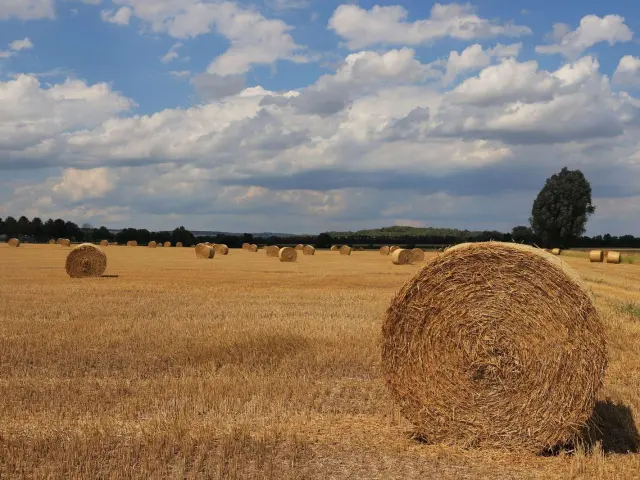
Everything starts with biomass, which the review defines in a general way as any organic matter derived from living, or recently living, animals or plants, including the waste derived from them. It also admits that exactly what counts as biomass is open to discussion. The common feedstocks it lists are:
- grasses;
- starch crops from wheat and maize;
- sugar crops from beet and cane;
- lignocellulosic materials from wood, crops or residues;
- oil crops;
- algae and seaweeds;
- organic wastes from industry, agriculture and livestock, plus commercial and post-consumer waste.
The review’s own framing leans toward non-edible material and waste. That is why lignocellulosic residues and organic waste feature so heavily in the discussion of what a biorefinery should process.
How biomass is converted: processes and platforms
The review says there are four main features commonly used to classify biorefinery systems: feedstock, processes, platforms and products. Its keywords name a biotechnological platform and a thermochemical platform. As the names suggest, one route leans on biology, the same family of processes behind the fermented foods above, and the other on heat and chemistry.
Put those four features in order and you get the basic flow of any biorefinery:
- Feedstock: grasses, crops, wood residues, algae or organic waste are collected.
- Process: the biomass is transformed by the chosen conversion route.
- Platform: intermediate building blocks are made through a biotechnological or thermochemical platform.
- Products: fuels, chemicals and materials leave the plant.
The review also sorts biorefineries into types according to the number of feedstocks they process and the number of products they make. A site with many feedstocks and many products is more integrated than one built around a single input and output.
What comes out: fuels, chemicals and materials
The outputs are best understood through building blocks. The review discusses bio-based chemical building blocks as identified by the U.S. Department of Energy in 2004, and it has tables of uses and applications for derivatives of several of them, as listed in the full text:
- ethanol;
- glycerol;
- lactic acid;
- succinic acid;
- levulinic acid.
Fuels are one family of outputs, and our guide to the types of biofuels shows how they differ. Materials are another, and the bioplastics pros and cons article looks at that side in more detail.
Some of this already works commercially. According to the review’s abstract, state-of-the-art biorefineries already produce cost-competitive chemicals and materials, as published in Frontiers in Chemistry in November 2022. Other products remain challenging economically, or their scaled-up production is not yet sufficiently developed.
Why biorefineries are not everywhere yet
The review sets a demanding test. Biorefineries must integrate with current infrastructure, and their materials and chemicals should cost no more than petrochemical counterparts while performing at least as well, according to the PubMed Central text. The authors say that a lack of cost-efficient scaled-up processes, and the lower performance of many biorefinery products, have kept the economy largely based on fossil sources.
Three hurdles stand out:
- Scale and cost: some processes are not yet cost-efficient at large scale.
- Performance: many biorefinery products do not yet match petrochemical alternatives.
- Lignin: the abstract calls lignin’s depolymerization a required milestone for integrated biorefineries, with better catalysts and processes needed to make bio-based aromatic simple molecules.
Climate goals add urgency. The review says at least six of the 17 UN sustainable development goals depend heavily on two challenges: cutting greenhouse gas emissions quickly, and replacing crude oil as a non-renewable source. Biorefineries address the second one, as described in the review’s introduction.
Frequently asked questions
Is a biorefinery the same as an oil refinery?
Show answer
No. The two play similar roles, but a biorefinery starts from biomass and biomass waste rather than crude oil. The 2022 review presents it as the alternative to traditional refineries.
Does a biorefinery only make fuel?
Show answer
No. The review describes biorefineries as producing fuels, chemical building blocks and materials. Fuel is only one of the product families.
What can a biorefinery use as feedstock?
Show answer
The review lists grasses, starch and sugar crops, lignocellulosic materials, oil crops, algae and seaweeds, and organic wastes. It emphasises non-edible biomass and waste.
Why hasn’t biomass replaced fossil raw materials already?
Show answer
According to the review, cost-efficient scaled-up processes are lacking and many biorefinery products perform less well than petrochemical alternatives. Lignin conversion is one of the milestones still needed.